
Government Waste Management Services in Maryland: A Guide for Agencies & Contractors
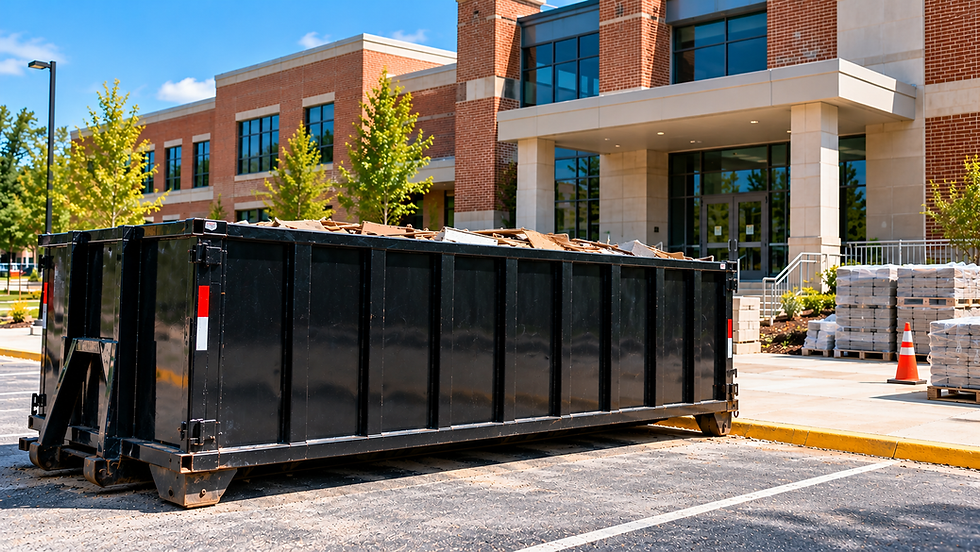
Government agencies and public-sector contractors manage a wide range of waste streams across facilities, public spaces, construction projects, transportation corridors, and community events.
Unlike many residential waste needs, government waste management often involves additional considerations, including procurement requirements, service documentation, public safety, environmental compliance, scheduling, and coordination among multiple stakeholders.
For municipalities, state agencies, federal facilities, and prime contractors operating in Maryland, Washington, DC, and Northern Virginia, establishing a dependable waste management strategy can help maintain safe, organized, and operationally efficient public environments.
Understanding the available services, contractor qualifications, and coordination requirements is an important first step.
Why Government Waste Management Requires Specialized Planning
Public-sector waste projects can vary significantly in scope and complexity.
A municipal public works department may need assistance with roadside litter removal or illegal dumping cleanup. A government facility may require temporary dumpsters during renovations. An agency hosting a public gathering may need coordinated waste collection, event cleanup, and post-event debris removal.
Government contractors may also need waste hauling or disposal support to fulfill requirements under larger construction, maintenance, or facilities contracts.
These situations often require more than basic waste pickup.
Successful planning may involve:
Clearly defined scopes of work and service frequencies
Approved service locations and site access procedures
Equipment and container requirements
Worker and public safety considerations
Proper waste handling and disposal
Recycling and diversion opportunities
Scheduling and operational coordination
Service records and completion documentation
Contract-specific insurance and compliance requirements
A well-organized waste management program should account for these requirements before services begin.
1. Commercial Waste Collection for Government Facilities
Government offices, administrative buildings, maintenance facilities, public works yards, and other public properties may generate recurring waste that requires scheduled collection.
Depending on the location, services may involve commercial waste containers, routine collection, recycling, or periodic bulk waste removal.
Facility managers should evaluate waste volumes, available container space, vehicle access, collection frequency, and site-specific restrictions.
Government facilities with multiple locations may also benefit from centralized service coordination to maintain consistent communication and simplify service requests across their properties.
2. Roadside Litter Removal and Public Right-of-Way Cleanup
Roadside litter and illegally discarded materials can create safety concerns, reduce community appearance, and interfere with public infrastructure maintenance.
Transportation agencies and public works departments may require cleanup support along roadways, medians, shoulders, access roads, and other public rights-of-way.
These projects require careful consideration of worker exposure, traffic conditions, access limitations, and the type of materials being collected.
Where work occurs near moving traffic, appropriate traffic control planning and protective measures may be necessary under the applicable work-zone requirements.
ASAP Waste Services brings experience associated with roadway litter collection and public-sector field operations, helping inform how these projects are evaluated and coordinated.
Service requirements should always be established according to the specific roadway, agency, and contract.

3. Illegal Dumping Cleanup on Public Property
Illegal dumping is a recurring concern for municipalities, public works departments, and agencies responsible for maintaining public land.
Discarded furniture, tires, construction debris, household waste, and other materials can accumulate in unauthorized locations.
Cleanup planning should begin with documenting the site, identifying potential hazards, and determining the appropriate removal method.
Unknown containers, potentially hazardous materials, and regulated waste should not be handled as ordinary debris without proper identification and qualified personnel.
For routine nonhazardous dumping incidents, coordinated hauling and debris removal can help restore affected areas and reduce prolonged exposure to accumulated waste.
Agencies may also benefit from documenting cleanup activity to support internal reporting, budgeting, and recurring-location assessments.
4. Dumpster Rentals for Government Construction and Maintenance Projects
Public-sector construction and maintenance projects can generate substantial amounts of debris.
Examples include:
Government building renovations
Facility repairs and upgrades
Public infrastructure maintenance
Grounds and property improvements
Demolition and reconstruction activities
Temporary cleanup projects
Roll-off dumpsters can provide an organized collection method when the waste type, volume, placement area, and service schedule are suitable.
Before ordering containers, project managers should confirm acceptable materials, weight allowances, access conditions, placement restrictions, and hauling schedules.
Projects involving concrete, soil, asphalt, or other dense materials may require specialized containers or separate disposal arrangements.
Coordinating dumpster deliveries and exchanges with construction schedules can help reduce site congestion and unnecessary interruptions.

5. Recycling and Waste Diversion for Public Agencies
Recycling can be an important component of government waste management programs.
Depending on local processing options and project requirements, recyclable materials may include cardboard, certain metals, and other accepted commercial or construction materials.
Agencies may also establish waste-diversion goals as part of sustainability initiatives or facility management programs.
A practical recycling strategy should identify the materials being generated, appropriate separation procedures, available recycling outlets, and documentation requirements.
Recycling opportunities should be evaluated according to actual material conditions and available facilities rather than assuming every waste stream can be recycled.
6. Event Cleanup and Waste Management for Public Gatherings
Public events create temporary waste management needs that may differ significantly from routine facility operations.
Government-supported events, public demonstrations, community gatherings, ceremonies, festivals, and other permitted activities may require:
Temporary waste receptacles
Waste liners and collection supplies
On-site waste attendants
Continuous litter collection
Post-event grounds cleanup
Bulk material removal
Recycling coordination
Final site inspection and documentation
Event waste planning should consider attendance, duration, site layout, pedestrian access, collection points, and the timing of final cleanup.
For events near government buildings, monuments, parks, or other sensitive public spaces, access and scheduling restrictions may require additional coordination.
Field Experience: Upper Senate Park, Washington, DC

ASAP Waste Services completed a post-event cleanup project at Upper Senate Park in Washington, DC.
The project involved the removal of approximately 300 metal H-frame sign stakes, event-generated trash, cardboard, and miscellaneous materials following a public gathering.
Work was coordinated during overnight hours, with appropriate equipment and collection methods used to move materials efficiently while minimizing unnecessary site disruption.
Metal H-frame materials were separated for recycling, and the grounds received a final cleanup before project completion.
This project demonstrates the importance of advance site planning, suitable equipment, coordinated labor, and responsible material handling during public-space event cleanup.
7. Emergency and Short-Notice Waste Removal
Public-sector waste needs do not always follow a predictable schedule.
Unexpected dumping, storm-related debris, overflowing collection areas, facility incidents, or time-sensitive projects may require additional service.
Agencies and contractors should establish procedures for communicating urgent requests, confirming the scope, approving additional work, and documenting completion.
Availability for emergency or after-hours service depends on location, materials, equipment, personnel, and the applicable contract requirements.
A defined coordination process can help agencies respond more effectively when unplanned waste issues occur.
8. Working With Waste Management Subcontractors
Many public-sector projects involve prime contractors responsible for coordinating multiple specialized service providers.
Waste management subcontractors may support construction projects, facility maintenance contracts, event operations, transportation maintenance, and other government activities.
Before engaging a subcontractor, prime contractors should verify that the proposed provider meets applicable requirements for the assigned work.
Important considerations may include:
Relevant service experience
Equipment and operational capabilities
Required insurance coverage
Licensing and permits where applicable
Safety procedures
Geographic service availability
Disposal and recycling arrangements
Documentation and reporting
Contract-specific subcontracting requirements
Clear communication between the agency, prime contractor, and waste service provider is essential to avoid confusion regarding scheduling, responsibilities, and performance expectations.
9. What Agencies Should Look for in a Waste Management Contractor
Selecting a contractor involves more than comparing prices.
Public-sector buyers should evaluate whether a company can meet the operational and administrative requirements of the specific project.
Defined Scope and Pricing
The proposed services should clearly identify work locations, service frequencies, materials, equipment, quantities, and any conditions that could affect cost.
Safety and Compliance
Contractors should demonstrate appropriate safety practices and the ability to comply with applicable waste handling, transportation, disposal, and site requirements.
Service Documentation
Depending on the contract, documentation may include work orders, service dates, completion photographs, disposal records, invoices, and other required reporting.
Communication and Responsiveness
Agencies should understand who coordinates service, how issues are escalated, and how changes to the scope or schedule will be addressed.
Capacity and Service Coverage
The contractor's available resources and qualified service partners should align with the project's geography, timing, and operational requirements.
10. Procurement Considerations for Government Waste Services
Government waste management services may be purchased through competitive solicitations, task orders, existing contracts, purchase orders, or other authorized procurement methods.
The process varies by agency, jurisdiction, dollar value, funding source, and contract requirements.
Before submitting a proposal or requesting a quotation, buyers and contractors should review:
The statement of work
Applicable solicitation instructions
Service locations and performance periods
Required qualifications and registrations
Insurance and safety requirements
Waste disposal and reporting obligations
Evaluation criteria
Pricing schedules
Subcontracting limitations
Invoicing and payment provisions
For federal opportunities, contractors may also need an active registration in the System for Award Management when required by the procurement.
State and local opportunities may have separate vendor registration or certification requirements.
Certifications and registrations should be verified for the particular entity and procurement. Holding a certification does not automatically establish eligibility for every solicitation.
11. Coordinating Government Waste Services Across Maryland, DC, and Northern Virginia
Government projects can span multiple facilities, jurisdictions, or service categories.
ASAP Waste Services, LLC coordinates waste management solutions through a combination of internal operational capabilities and qualified service partners, depending on project requirements and location.
This approach can help agencies and prime contractors source and coordinate services such as:
Commercial waste collection
Dumpster rentals
Roadside litter removal
Illegal dumping cleanup
Construction debris removal
Recycling
Event cleanup
Public property cleanup
Each opportunity is evaluated according to the scope, service area, schedule, available resources, and applicable contractual requirements.
The objective is to provide organized service coordination while maintaining clear expectations regarding responsibilities, documentation, and completion.
Frequently Asked Questions About Government Waste Management Services
What types of waste management services do government agencies need?
Government agencies may require recurring commercial waste collection, dumpster rentals, recycling, roadside litter removal, illegal dumping cleanup, construction debris hauling, event cleanup, and special-project waste removal.
Can waste management companies work as subcontractors on government contracts?
Yes. Qualified waste management companies may provide services as subcontractors to prime contractors when the arrangement is permitted by the contract and applicable procurement rules. Specific licensing, insurance, safety, and subcontracting requirements must be reviewed.
Are dumpster rentals available for government construction projects?
Dumpster rentals may be arranged for eligible government renovation, maintenance, construction, and cleanup projects. Container size, acceptable materials, placement, service frequency, and access requirements should be established before delivery.
Can ASAP Waste Services coordinate waste services for government projects in Maryland, DC, and Northern Virginia?
ASAP Waste Services evaluates and coordinates public-sector waste service opportunities throughout the DMV region using internal resources and qualified service partners based on the project scope, location, and operational requirements.
What documentation may be required for government waste removal projects?
Requirements vary by contract. Agencies may request work orders, service logs, before-and-after photographs, disposal or recycling records, invoices, insurance documentation, and other project-specific reporting.
Does ASAP Waste Services provide support for government event cleanup?
ASAP Waste Services coordinates event waste management and cleanup services, including waste collection, post-event debris removal, and recycling where practical. The company has completed public-space event cleanup work in Washington, DC, including an overnight project at Upper Senate Park.
Building a More Effective Government Waste Management Program
Government waste management requires careful planning, dependable coordination, and an understanding of operational and procurement requirements.
Whether the project involves recurring collection, roadway litter removal, construction debris, recycling, or public event cleanup, clearly defined scopes and communication procedures can help agencies and contractors achieve more consistent service outcomes.
Working with providers who understand site logistics, documentation, safety considerations, and service coordination can make a meaningful difference in public-sector waste operations.

Need Government Waste Management or Subcontractor Support?
ASAP Waste Services, LLC works with commercial organizations, government-related projects, and prime contractors seeking coordinated waste management solutions across Maryland, Washington, DC, and Northern Virginia.
Our team can review project requirements and coordinate appropriate waste services based on the scope, location, schedule, and available capabilities.
Contact ASAP Waste Services to discuss an upcoming government waste management project, request a quotation, or explore subcontractor support opportunities.
Visit: www.asapwastehauling.com


Comments